KEY POINTS
- The airframe of a Shahed-class drone carries about one eight-hundredth of the energy its warhead releases. The detonation, not the crash, decides what happens to the asset.
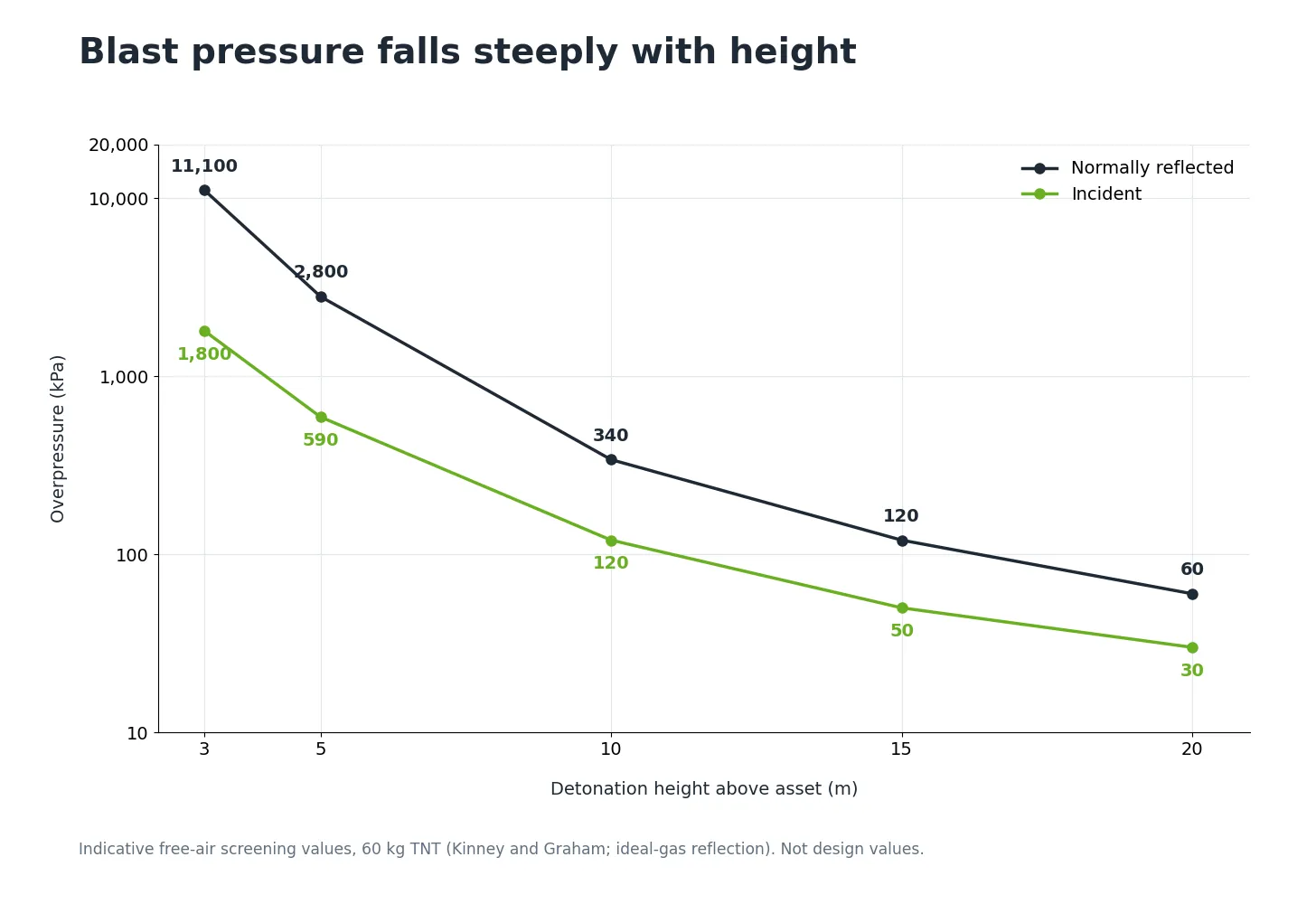
- Raising the detonation from 5 m to 15 m above an asset cuts the reflected blast pressure more than twentyfold, but no net stops fragments.
- Single nets get torn and vents get flown through. Protection needs layers: capture screens, an expansion gap, a solid shield and a verified asset.
- Every performance claim should trace to a calculation, a test or a validated model, not a brochure.
Abstract
One-way attack drones have become one of the fastest-growing threats to the infrastructure that keeps modern life running: power substations, fuel terminals, processing plants, airports and data centers. They are inexpensive, they fly long distances, and a single hit on the right transformer or tank can shut down a facility for weeks. Owners around the world are responding by building nets, cages and shelters quickly. This briefing explains, in plain terms, why many of those measures will not perform as expected, and what owners should ask for instead. Its central message is simple: protecting an asset from an attack drone is not about catching the drone. It is about controlling where, and how far from the asset, its warhead goes off. PNH calls this approach detonation-governed design, and this briefing introduces it to owners, contractors and engineers who are making protection decisions now.
1. A Threat Hiding in Plain Sight
For decades, protecting a substation or a fuel farm meant a fence, a camera and a guard. That model assumed the attacker had to come through the gate. One-way attack drones remove that assumption. They come from above, they arrive in minutes from far away, and they cost a fraction of what they can destroy.
The record is already long. In 2019, strikes on two oil processing sites in the Arabian Peninsula temporarily disrupted about 5.7 million barrels per day of production. In 2022, a drone attack near fuel storage in Abu Dhabi caused three fuel tankers to explode, killing three people [10, 11]. In 2026, a drone strike set a fuel tank alight at a Gulf airport, and protection built over three years at Ukrainian substations was defeated at some sites by drones that tore through nets and flew in through ventilation openings [5, 9]. Appendix A summarizes these events.
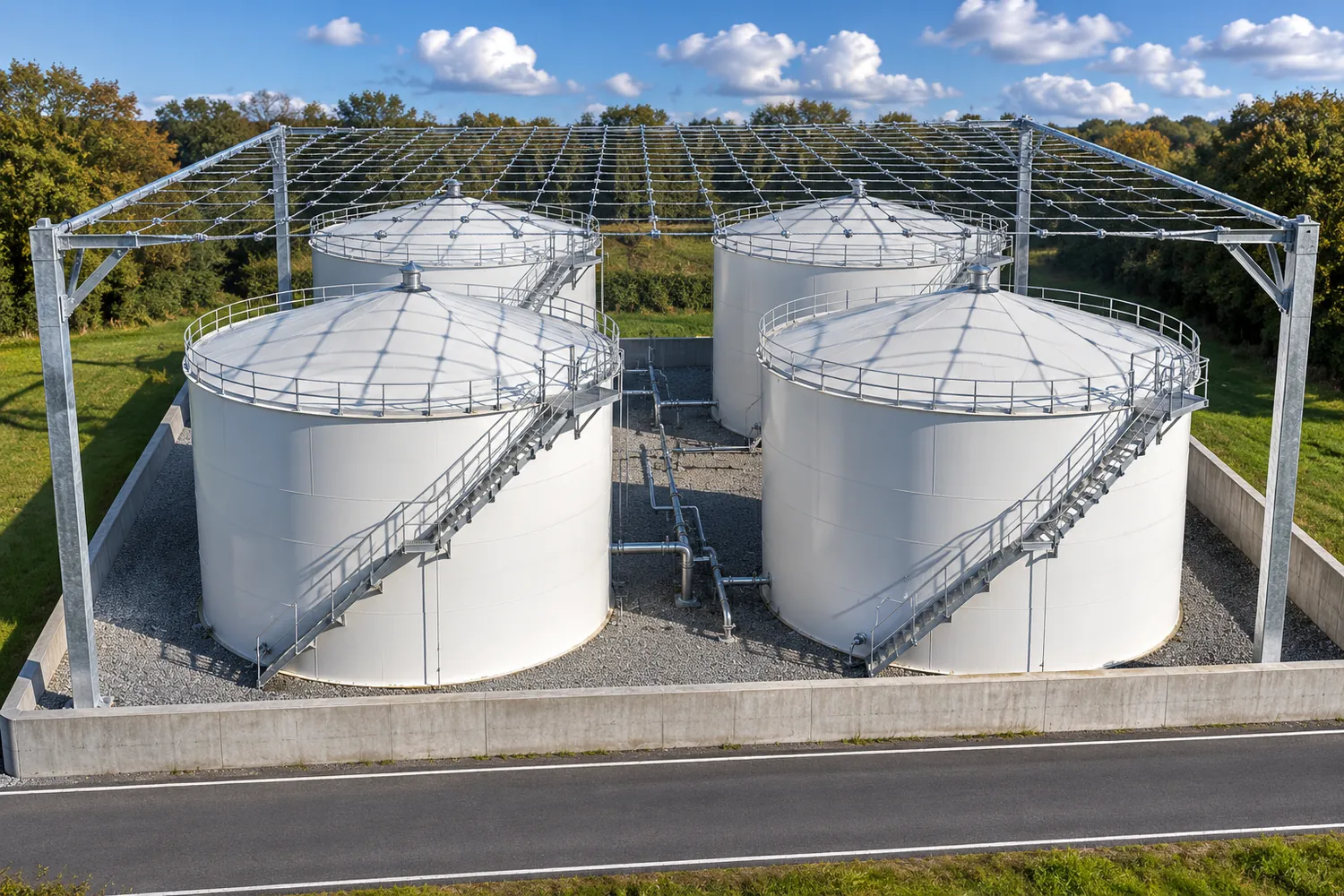
Owners are responding at speed. Ukraine has placed over half of its large transformers under concrete shelters [6]. Refineries have hung steel cable nets over their key columns [7, 8]. Overhead cages have gone up over fuel farms. Speed matters, but much of this protection is being bought from product data sheets rather than designed for the threat. That is where the risk lies.
2. Why Passive Protection Matters Now
Detection, jamming and interceptors all have a role, but they are expensive, they can be overwhelmed, and newer drones guided by fiber-optic cable cannot be jammed at all [5]. US guidance now treats passive hardening, such as nets, closed openings and structural shielding, as a core measure [2]. Passive protection, meaning screens, shields and enclosures that work without detecting or engaging the drone, is the layer that is always on.
For many owners it is also the only option they control. In the United States, the legal authority to jam, take control of or intercept drones is limited to designated federal agencies and, since the SAFER SKIES Act of December 2025, to trained and certified state and local law enforcement [12]. Utilities, data center operators and industrial owners have no such authority. If they want their assets protected, passive protection is their tool.
3. It Is a Detonation Problem
The most common misunderstanding about attack drones is that the danger is the crash. It is not. The danger is the warhead.
Take the most widely used one-way attack drone, the Shahed-136, published at about 200 kg with a 50 kg warhead and a speed of about 185 km/h [1]. The energy of the airframe in flight is a tiny fraction of the energy its warhead releases when it detonates: about 0.13 percent, or roughly one part in 800, even when the full warhead mass is conservatively taken as TNT (Figure 1).
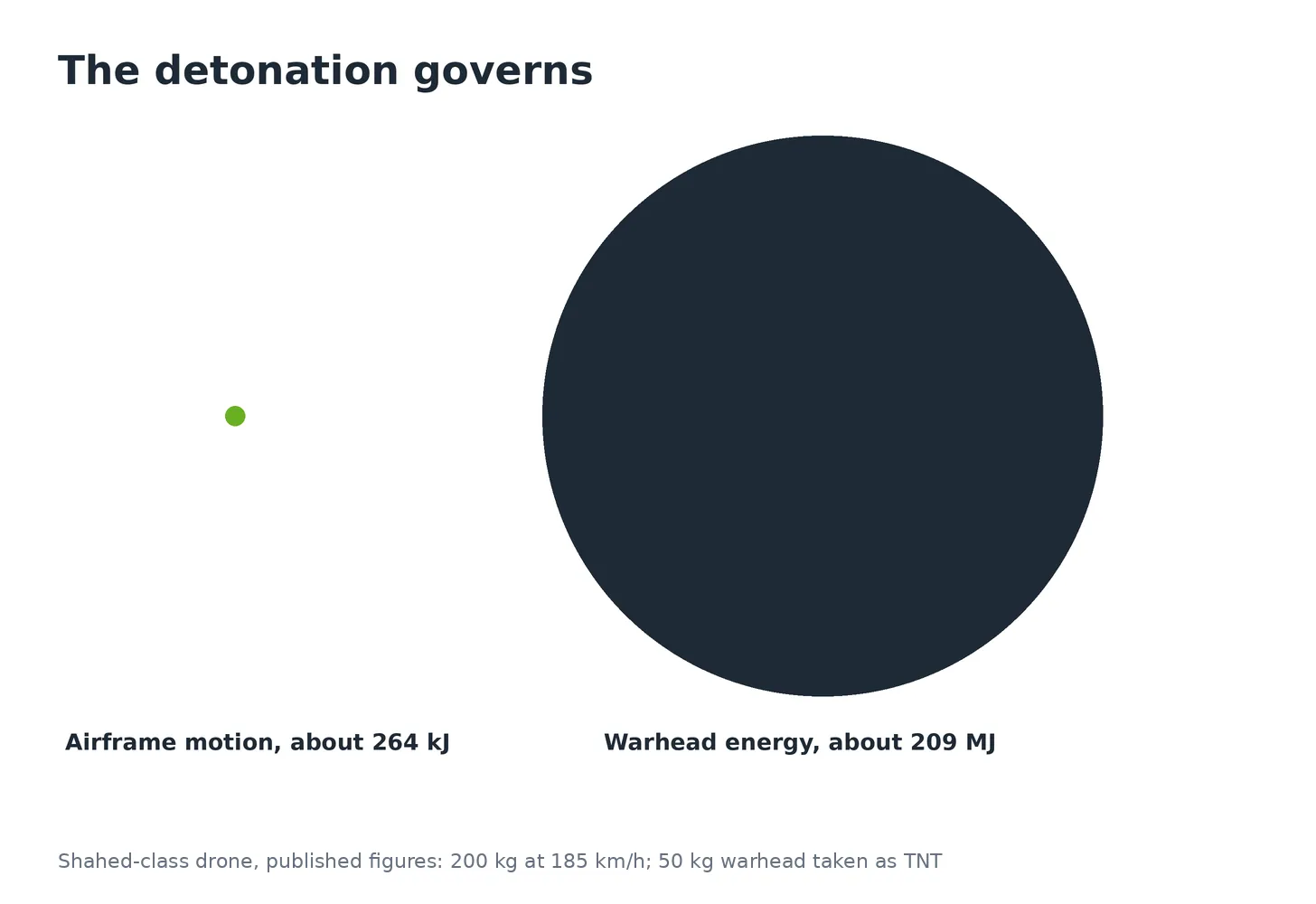
That single comparison changes how protection should be designed. A net strong enough to catch the drone has solved only the smallest part of the problem. What reaches the asset afterward, the blast, the fragments from the casing and the fire, is what decides whether the plant keeps running.
4. Three Lessons from the Field
4.1 A Net Alone Does Not Protect What Lies Below It
A net that catches a drone also decides where its warhead goes off. If the net is close above the asset, the blast arrives at almost full strength. Blast pressure falls steeply with distance. Figure 2 shows screening values for a 50 kg warhead taken as TNT, with the customary 20 percent design margin. The height of the detonation above the asset matters enormously: moving it from 5 m to 15 m reduces the reflected pressure on the asset's surface more than twentyfold [3, 4]. And no net stops the fragments thrown by the warhead. Height helps, but a solid layer between the net and the asset is usually still needed.
4.2 Single Layers Can Be Torn
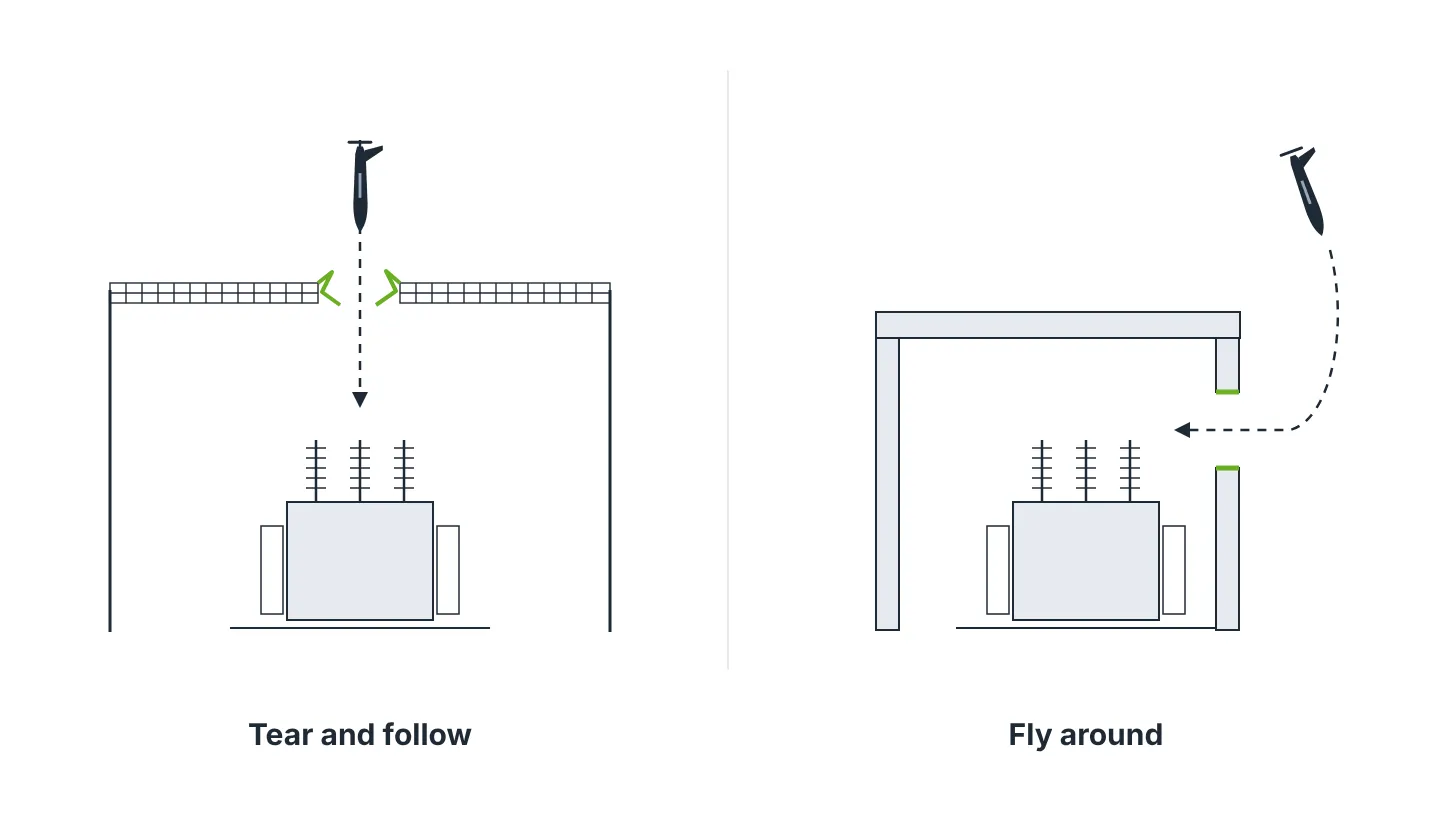
Field reporting from Ukraine describes attackers sending a first drone to tear a net, so that a second can pass through the gap (Figure 3, left) [5]. A single net, however strong, is a single point of failure.
4.3 Openings Are Doors
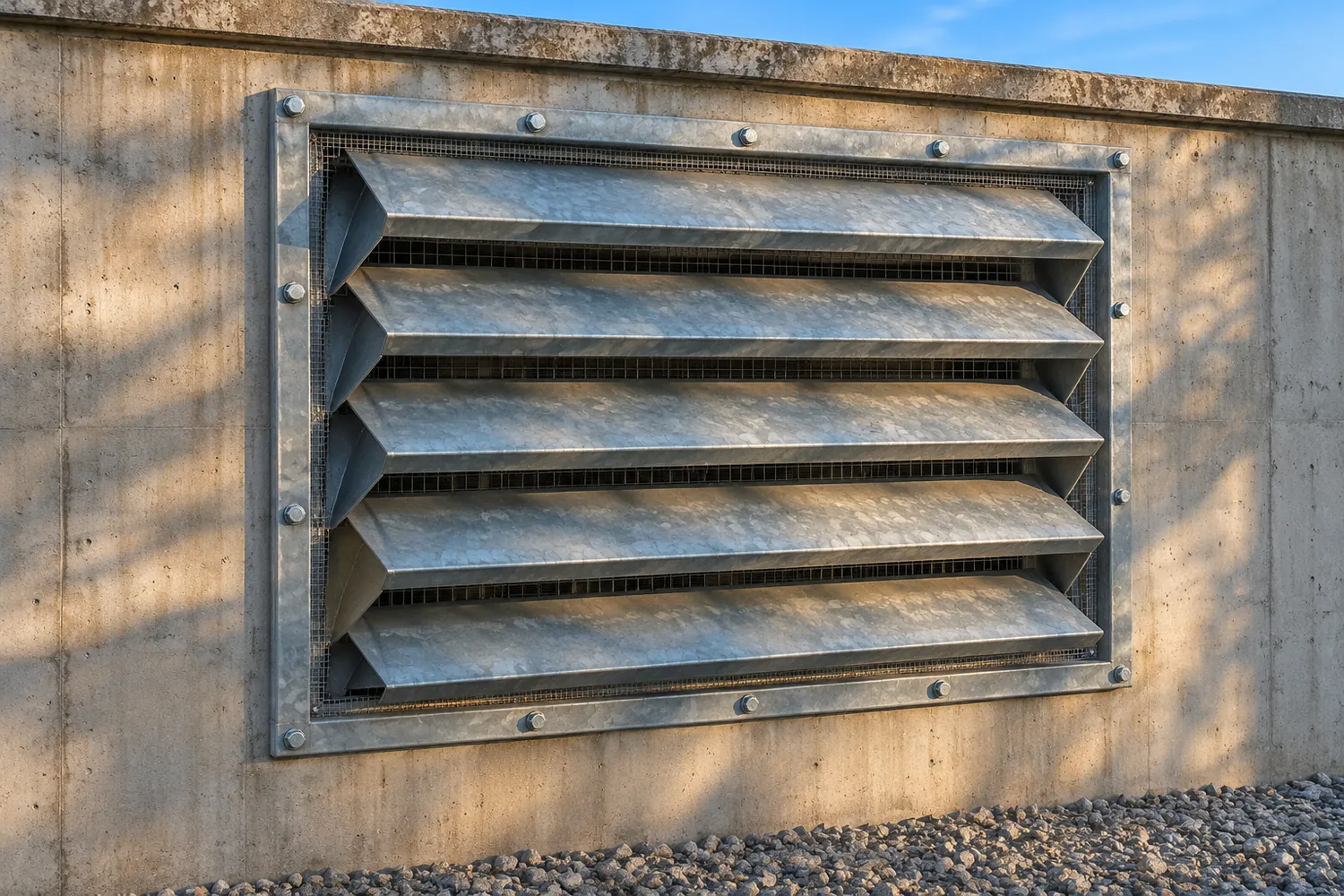
Transformers and generators need air, access and fire separation, so their shelters have vents. Attackers have flown drones around shelters and in through those vents (Figure 3, right). An enclosure is only as good as its weakest opening.
5. Detonation-Governed Design
5.1 Design for What Arrives After the Detonation
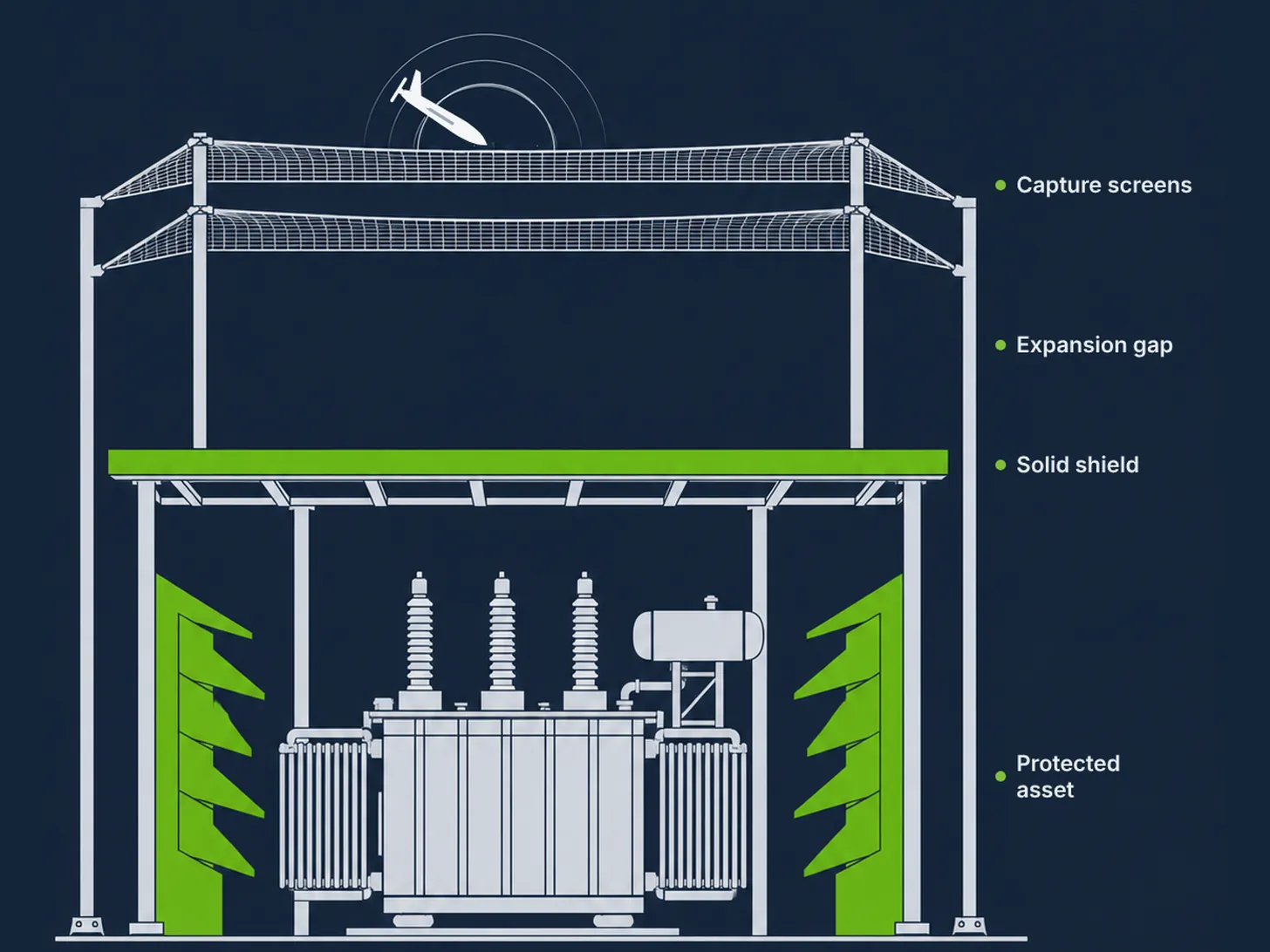
PNH developed and named detonation-governed design, an engineering approach that starts from where and how the warhead goes off and works outward to the asset, rather than starting from a product catalog. It treats protection as a system of four layers, each with a clear job (Figure 4):
- Capture screens stop the drone or set off its warhead at a deliberate distance from the asset, with two independent layers where one tear would leave the asset exposed.
- An expansion gap gives the blast room to spread and weaken before it reaches anything that matters.
- A solid shield stops what is left of the blast and the fragments.
- The protected asset is checked against clear, agreed criteria: it keeps running, it does not leak or catch fire, and nothing reaches it that should not.
5.2 Operable, Repairable, Verifiable
Good protection must also live with the plant. It must be operable, so cranes can still lift, equipment can still cool, firefighters can still reach a fire and people can still escape. It must be repairable, with spares on hand so protection can be restored quickly after an event. And it must be verifiable: every claim about its performance should trace to a calculation, a test or a validated model, not to a brochure.
5.3 One Approach, Every Kind of Asset
Most energy and industrial facilities reduce to four families of assets, each with its own constraint. Designing one concept for each family and applying it across the site keeps the protection consistent and the cost per asset down (Figure 5).
| Family | Typical assets | Governing constraint | Concept directions |
|---|---|---|---|
| Buildings | Control rooms, switchgear and gas-insulated switchgear (GIS) buildings, generator buildings, data halls | Roof capacity and openings | Standoff screen on an independent frame; hardened roof-over and wall shields; shielded openings |
| Open equipment areas | Transformers, switchyards, process units, yard and rooftop chillers and generators | Heat rejection, crane access and electrical clearances | Overhead screen above a solid shield; lateral barriers; local hardening of critical components |
| Storage tanks | Fuel, water and chemical tanks in containment dikes | Large spans, fill level, firefighting and spill routes | One overhead system over the tank farm; individual tank hoods; outer shell or dome |
| Intakes and linear systems | Water intakes, pumps, pipe and cable corridors | Length, access and maintenance | Screens on portal frames in bays; covered sections; local hardening of pumps and valves |
6. How PNH Approaches Protection for the Drone Era
PNH brings the discipline of blast and protective design engineering, built over decades for the most demanding security environments, to a threat that much of the market is still meeting with off-the-shelf nets. Three things set PNH apart.
Engineering first. PNH starts every engagement with a written design basis: the threat, where the warhead can go off, and what the asset must survive. Protection is then designed and verified against that basis, using engineering calculations, with testing and advanced simulation only where they add value.
Independent and vendor-neutral. PNH sells no nets, cages, barriers or panels and takes no supplier commissions. The specification is written around the owner's threat and assets, so any qualified supplier can bid it and the owner gets competitive value.
A clear path to a decision. PNH works in two fixed-fee phases with a decision gate between them. Phase 1 delivers a design basis and a feasibility review of concepts for each asset family, so owners see what will work, and roughly what it will take, before committing to detailed design. Phase 2 delivers the detailed design, the specifications and the loads the owner's structural engineer needs, and closes with an engineering verification of the complete system against the design basis.
PNH works under nondisclosure agreements and supports owners, engineering, procurement and construction (EPC) contractors and owner's engineers, from early feasibility through tender, design and review.
Is your protection designed for the detonation?
Arrange a confidential design basis and feasibility review with Pedram Hesam, PhD, PSP.
Learn more about PNH's passive anti-UAV protection service.
7. Design for the Detonation
The drone is only the delivery system. The detonation is what damages the asset. Protection built to catch drones protects the net; protection designed for the detonation protects the plant. The owners who get this right will not necessarily spend more. They will ask better questions, insist on a design basis, and buy protection that keeps their assets running after an attack, not only protection that looks reassuring before one. The checklist in Appendix B is a good place to start.
Appendix A: Incident Chronology, 2019 to 2026
| Date | Event | What it showed |
|---|---|---|
| September 2019 | Strikes on two oil processing sites in the Arabian Peninsula temporarily disrupted about 5.7 million barrels per day of production | A few hits on process items can disrupt national output |
| January 2022 | A drone attack near fuel storage in Abu Dhabi caused three fuel tankers to explode, killing three people | Industrial sites near cities are within reach |
| April 2024 | Russian refineries covered key columns with steel cable nets; at one depot a net reportedly stopped a direct hit without damage or fire | A well-placed screen can set off the warhead away from the asset |
| 2023 to February 2026 | Ukraine built three levels of passive grid protection; concrete shelters covered over half of its large transformers, at about USD 300 million | Passive protection can be deployed at national scale |
| 2026 | Regional hostilities: a drone strike caused a fuel tank fire at a Gulf airport; overhead cages were built over its fuel farm within months | One hit on one tank can close a critical facility |
| July 2026 | Ukraine: small drones defeated substation protection by tearing nets and entering through ventilation openings | Single layers and openings are the weak points |
Appendix B: Owner's Checklist
Before building or accepting anti-drone protection, an owner should be able to answer yes to each question below. If any answer is no or unknown, a design basis and feasibility review is the most economical next step.
- Is there a written threat and design basis, rather than only a product data sheet?
- Was the protection checked for the detonation, not only for catching the drone?
- Is there a solid layer between the net and the asset?
- If one net is torn, is the asset still protected?
- Are all vents, louvers and cable entries baffled or screened?
- Can the plant still lift, cool, fight fires and evacuate?
- Can protection be restored quickly after a hit, with spares in stock?
- Does every performance claim trace to a calculation, a test or a validated model?
References
- Janes. "IRGC Confirms Specs for Shahed-136 Attack UAV." May 2023.
- Joint Interagency Task Force 401. Guide for Physical Protection of Critical Infrastructure. US Department of Defense, January 30, 2026.
- US Department of Defense. UFC 3-340-02, Structures to Resist the Effects of Accidental Explosions. December 2008, with changes.
- Kinney, Gilbert F., and Kenneth J. Graham. Explosive Shocks in Air. 2nd ed. Springer, 1985.
- Reuters. "Russia Evades Ukraine Electrical Substation Defences with Small, Unjammable Drones." July 10, 2026.
- The Kyiv Independent. "Ukraine Moves Its Power Grid Underground to Shield It from Russian Attacks." February 10, 2026.
- Hydrocarbon Processing. "Russia's Bashneft Oil Company Installs Anti-Drone Nets to Protect Refineries." April 2024.
- Militarnyi. "Anti-Drone Nets Saved Russian Oil Depot." n.d.
- Paddle Your Own Kanoo. "Dubai International Airport Completes Work on Massive Metal Cages to Protect Fuel Tanks from Iranian Drone Attack." August 22, 2026.
- CNBC. "Three Dead, Six Injured in UAE Fuel Tanker Explosions Claimed by Yemen's Houthis." January 17, 2022.
- Congressional Research Service. Attacks on Saudi Oil Facilities: Effects and Responses. CRS Insight IN11173, September 2019.
- Congressional Research Service. Regulating State, Local, Tribal, and Territorial Law Enforcement Actions to Counter Unmanned Aircraft Systems (C-UAS). CRS In Focus IF13279, July 29, 2026.

ABOUT THE AUTHOR
Pedram Hesam, PhD, PSP, is Chief Technical Officer at PNH, where he leads protective design engineering practice in blast, impact, fragment and hostile vehicle mitigation for critical infrastructure and public facilities. He has more than 17 years of experience in blast and antiterrorism engineering and holds a PhD in Civil Engineering from Purdue University and the Physical Security Professional (PSP) credential from ASIS International. He is co-author of "Mitigating Vehicle Ramming Threats with Layered Protection" (Security Management, ASIS International, September 2025).